The Hidden Cost of Skipped Insulation Maintenance: Why Aging Equipment Fails Catastrophically
Most industrial facilities treat insulation as passive infrastructure, something you install once and forget about for decades. This mindset creates a ticking time bomb that explodes into million-dollar equipment failures when you least expect it. The harsh reality is that maintenance management comprises 40-50% of operational budgets across industrial facilities, yet insulation maintenance receives minimal attention until catastrophic failure forces emergency action.
Consider this sobering fact: gas-operated power plants averaging 10-15 years old still require rigorous insulation maintenance despite their relative newness in industrial terms. These facilities face cumulative wear patterns that compound over time, creating exponentially higher failure risks for equipment operating without structured inspection and protection protocols. The contrarian truth is that newer equipment often faces higher risk because operators assume modern systems require less maintenance attention.
The mathematical reality is stark. Equipment failures cost exponentially more than preventative maintenance programs. A single boiler failure in an industrial facility can cost $500,000 to $2 million in emergency repairs, replacement equipment, and lost production time. Meanwhile, comprehensive industrial insulation maintenance programs typically cost 5-10% of potential failure expenses. Yet facility managers continue to defer maintenance until visible problems emerge, by which point internal damage has often progressed beyond economical repair.
This pattern persists because insulation problems develop gradually and remain hidden until thermal inefficiency, moisture penetration, or structural damage reaches critical thresholds. By then, the underlying equipment has suffered months or years of accelerated wear that preventative maintenance would have prevented entirely.
Understanding the Multi-Frequency Maintenance Protocol: Daily, Weekly, Monthly, and Annual Inspections
Effective industrial insulation maintenance operates on multiple time frequencies, each designed to catch different types of problems before they escalate into expensive failures. This structured hierarchy ensures comprehensive protection while optimizing labor resources and inspection efficiency.
Daily visual inspections form the foundation of any successful maintenance program. These brief walkthrough assessments catch leaks, physical damage, and loose bolts before minor issues cascade into major problems. Trained maintenance personnel can spot insulation deterioration, moisture stains, and thermal irregularities during routine facility rounds. Small leaks from valve glands, packing, and gaskets are only detectable through consistent visual inspection, making daily protocols essential for early problem identification.
Weekly fluid level checks prevent internal equipment damage that leads to costly failures. These inspections verify that insulation systems maintain proper thermal barriers around critical equipment. Weekly protocols also include temperature monitoring to identify insulation degradation before it affects equipment performance. Pressure relief valve testing during weekly inspections can detect sticking issues, particularly important for valves operated infrequently in industrial systems.
Monthly filter inspection and replacement prevents reduced efficiency that compounds into higher operating costs and accelerated equipment wear. Monthly protocols address insulation integrity around filtration systems and verify that thermal barriers remain intact around temperature-sensitive equipment. These inspections also include documentation of any changes in equipment performance that might indicate developing insulation problems.
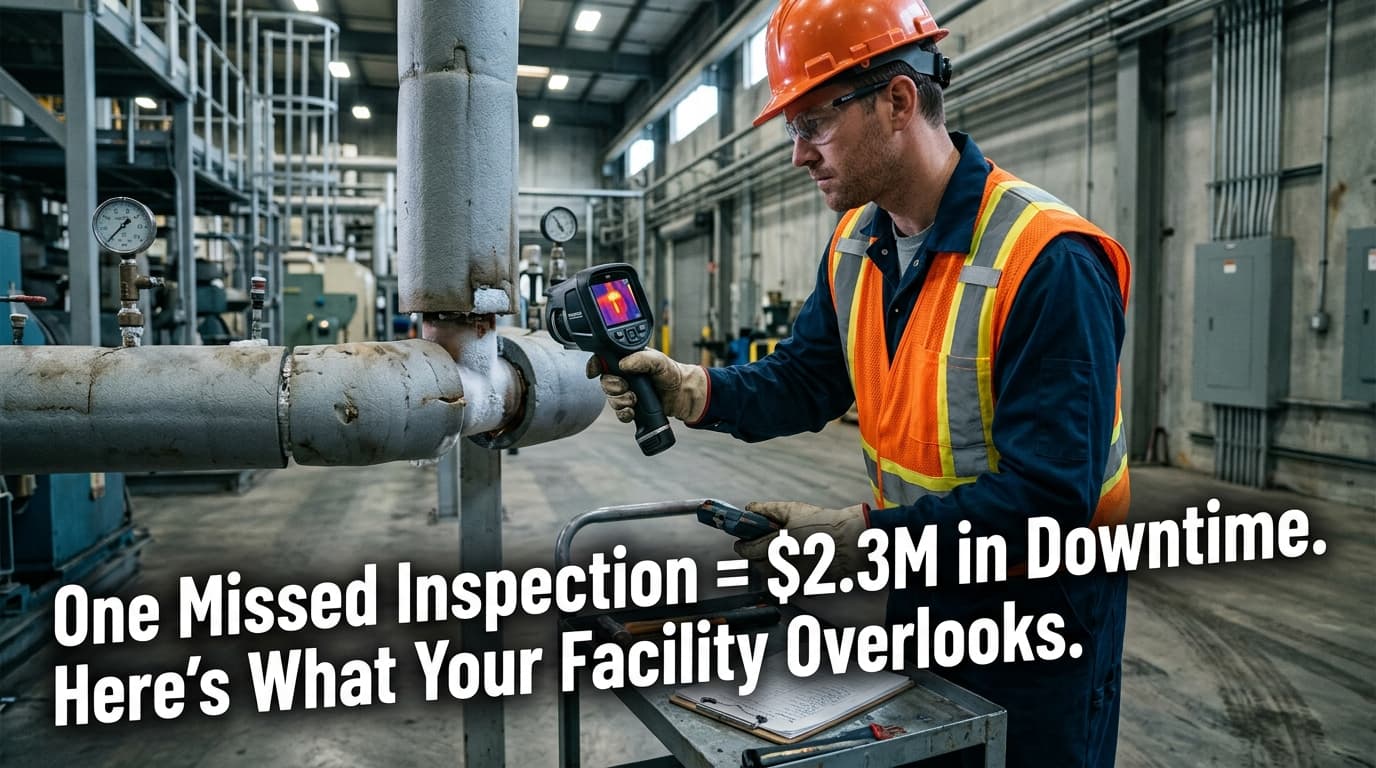
Annual major maintenance includes comprehensive insulation assessment, wear evaluation, and certification renewals. Licensed and certified contractors perform detailed thermal imaging, moisture analysis, and structural integrity testing during annual inspections. These deep assessments review cumulative equipment wear and identify insulation replacement needs before they become emergency situations.
Valve Integrity and Thermal Insulation: The Two Critical Failure Points
Industrial facilities face two interconnected failure modes that create cascading equipment damage: valve integrity problems and thermal insulation breakdown. These issues compound each other, creating exponentially higher risks when both systems degrade simultaneously.
Defective valves present the most immediate threat to industrial equipment. Valves that weep or leak from glands, packing, and gaskets create moisture problems that accelerate insulation deterioration. Small valve leaks often remain undetectable without systematic visual inspection protocols, allowing moisture to penetrate insulation systems and create internal corrosion. This moisture penetration compromises thermal barriers and creates hot spots that damage surrounding equipment.
Pressure relief valve failures pose particular risks in industrial systems because these safety devices operate infrequently. Valves that stick in closed positions during emergency situations can cause catastrophic equipment overpressure. Conversely, relief valves that fail to seal properly create constant energy losses and thermal inefficiencies. Both failure modes require specialized testing procedures that identify problems before they compromise system safety or efficiency.
Thermal insulation breakdown around valve assemblies creates hazardous high-temperature conditions that endanger personnel and accelerate equipment wear. When insulation fails around critical valves, the resulting heat exposure damages valve seals, gaskets, and packing materials. This creates a feedback loop where thermal damage causes valve leaks, which then accelerate insulation deterioration through moisture penetration.
The interconnected nature of these failure modes explains why comprehensive industrial insulation maintenance must address both thermal protection and valve integrity simultaneously. Licensed and certified contractors understand these failure patterns and implement inspection protocols that catch problems in either system before they cascade into major equipment damage.
How Professional Insulation Services Protect Your Bottom Line
Professional mechanical and HVAC insulation services deliver measurable financial returns by reducing operating costs, protecting equipment investments, and improving overall building performance. These services directly impact the 40-50% of operational budgets dedicated to maintenance management, creating substantial opportunities for cost reduction through preventative approaches.
Properly maintained insulation systems reduce energy consumption by maintaining optimal thermal barriers around critical equipment. This translates into lower utility costs and reduced strain on heating and cooling systems. Industrial facilities typically see 15-25% energy cost reductions when insulation systems receive professional maintenance compared to facilities that defer insulation care until visible problems emerge.
Equipment protection represents the largest financial benefit of professional insulation services. Boiler insulation maintenance prevents hazardous high-temperature exposure that damages internal components and shortens equipment lifespan. Professional contractors understand how thermal stress affects different equipment types and implement protection strategies that extend operational life by years or decades.
EPA and OSHA compliant requirements make professional insulation services essential for industrial facilities handling hazardous materials or operating in regulated environments. Licensed and certified contractors ensure that insulation work meets environmental standards and workplace safety requirements. Non-compliance penalties can reach hundreds of thousands of dollars, making professional services a cost-effective insurance policy against regulatory violations.
Professional insulation contractors also provide access to advanced diagnostic tools and techniques that internal maintenance teams typically cannot justify purchasing. Thermal imaging equipment, moisture detection systems, and specialized testing protocols enable early problem identification that prevents expensive emergency repairs. The cost of annual professional assessments represents a fraction of potential equipment replacement expenses.
Why Licensed and Certified Contractors Matter for Industrial Insulation
Industrial insulation work requires specialized expertise that only licensed and certified contractors can provide safely and effectively. Central Insulation Systems' 38+ years of operational history since 1988 demonstrates the long-term commitment and accumulated knowledge necessary for complex industrial applications.
Environmental compliance represents a critical area where licensing and certification requirements protect both facilities and workers. Hazardous materials handling, asbestos removal, and waste disposal procedures require specific training and certification that unlicensed contractors cannot legally perform. EPA and OSHA compliant regulations mandate that certain insulation work can only be performed by properly licensed environmental contractors.
Safety protocols in industrial environments require specialized training and certification to prevent workplace injuries and equipment damage. Licensed and certified contractors understand how to work safely around high-temperature equipment, hazardous chemicals, and complex industrial systems. They carry appropriate insurance coverage and maintain safety certifications that protect facilities from liability exposure during maintenance work.
Industry standards and best practices evolve continuously as new materials, techniques, and regulations emerge. Licensed and certified contractors invest in ongoing training and certification renewals that keep their knowledge current with industry developments. This ensures that insulation work meets current standards and incorporates the latest protective technologies.
The contrast between professional services and inadequate in-house maintenance approaches becomes evident when problems arise. Licensed and certified contractors can diagnose complex insulation failures, implement appropriate repairs, and prevent recurrence through systematic maintenance protocols. Internal maintenance teams often lack the specialized knowledge to address root causes of insulation problems, leading to repeated failures and escalating costs.
Your Action Plan: Building a Preventative Maintenance Program That Works
Creating an effective preventative maintenance program requires systematic assessment, structured scheduling, and professional partnerships that ensure comprehensive equipment protection. Start by auditing your current insulation condition across all critical equipment to establish baseline conditions and identify immediate concerns.
Establish inspection schedules that match the multi-frequency protocol: daily visual inspections for leaks and damage, weekly fluid level and temperature checks, monthly filter and thermal barrier assessments, and annual comprehensive evaluations by licensed and certified contractors. Document all findings and track patterns that indicate developing problems or successful preventative interventions.
Partner with licensed and certified contractors for annual assessments and major maintenance work. Central Insulation Systems provides comprehensive industrial insulation services that address both immediate needs and long-term equipment protection. Professional contractors bring specialized tools, expertise, and regulatory compliance knowledge that internal teams cannot match.
Implement a documentation system that tracks maintenance activities, equipment performance, and cumulative wear patterns. Computerized Maintenance Management Systems (CMMS) enable detailed analysis of equipment performance and help plan shutdowns and maintenance procedures for optimal efficiency. This data becomes invaluable for predicting maintenance needs and justifying preventative investments.
Calculate the return on investment for your preventative maintenance program by comparing annual maintenance costs to potential failure expenses. Most industrial facilities discover that comprehensive preventative programs cost 10-20% of potential emergency repair expenses while delivering superior equipment reliability and operational efficiency.
The time to act is now, before small problems escalate into million-dollar failures. Contact Central Insulation Systems at (513) 242-0600 for a professional consultation and free estimate on industrial insulation maintenance services. With over 38 years of experience serving government agencies, major corporations, and industrial facilities across 30+ states, we provide the licensed and certified expertise your facility needs to prevent costly equipment failures through proactive insulation maintenance.


