The HVAC Upgrade That Doesn't Deliver
You spent $8,000 on a gleaming new SEER2 20 heat pump system, confident you'd see those promised 30% energy savings on your cooling bills. Three months later, you're staring at utility bills that barely budged. The contractor swears the equipment is working perfectly, and it is. The problem isn't your new HVAC system: it's everything around it.
Here's what the HVAC industry doesn't want you to know: a SEER2 20 system can indeed reduce cooling energy by roughly 30% compared to baseline systems, but only if your home can actually contain that conditioned air. When about 30% of all energy used in buildings goes to waste through poor insulation and air leaks, your high-efficiency equipment is essentially pouring expensive conditioned air into the atmosphere.
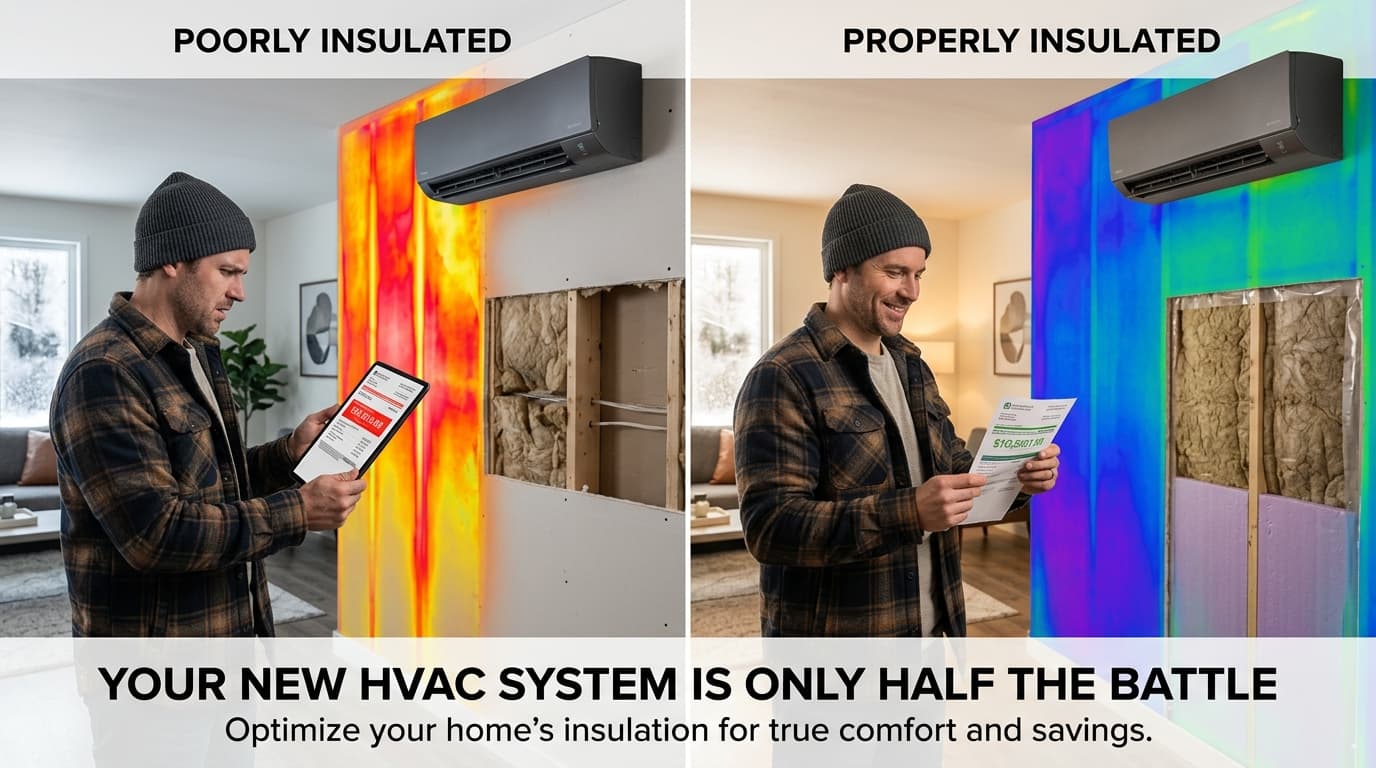
The math is brutal. Your new system runs at peak efficiency for maybe 20 minutes, cooling your home to the desired temperature. Then poorly sealed windows, inadequate attic insulation, and leaky ductwork let that expensive cool air escape while hot outdoor air infiltrates. Your efficient system kicks back on, working overtime to compensate for your home's energy losses. You've upgraded the engine but ignored the fact that your gas tank has holes in it.
This is why HVAC insulation upgrades energy savings require a systems approach. The 30% energy reduction you were promised isn't a myth, but achieving it demands more than swapping out equipment. It requires treating your home as an integrated system where insulation, air sealing, and mechanical equipment work together to capture and maintain efficiency gains.
How Insulation Failures Sabotage High-Efficiency Equipment
Your new SEER2 20 heat pump operates like a precision instrument, but inadequately insulated homes turn that precision into waste. When heat loss occurs in winter and heat gain happens in summer through compromised building envelopes, even the most efficient equipment can't overcome basic physics. The system cycles more frequently, runs longer, and works harder than it should.
Consider what happens on a typical summer afternoon. Your efficient heat pump cools your home to 72°F, then shuts off. Within minutes, heat begins transferring through poorly insulated walls, ceilings, and floors. Hot attic air radiates down through insufficient ceiling insulation. Unconditioned air leaks through gaps around windows, doors, and penetrations. Your thermostat registers 74°F, and the system fires up again.
Inadequately insulated homes experience significant temperature fluctuations that force HVAC systems to work overtime, completely negating the efficiency gains you paid for. The equipment performs exactly as designed, but the building envelope fails to maintain the conditions that allow efficient operation. You're essentially air conditioning the outdoors while paying premium prices for high-efficiency equipment.
This is where professional insulation and air sealing become essential, not optional. Good insulation prevents heat loss in winter and reduces heat gain in summer, reducing HVAC system runtime to match the equipment's designed efficiency levels. Without this foundation, your HVAC insulation upgrades energy savings will never materialize, regardless of how efficient your new equipment rates on paper.
The Complete Upgrade: System + Insulation + Air Sealing
Real energy savings require a three-part approach that addresses equipment efficiency, thermal barriers, and air infiltration simultaneously. This means combining your new HVAC system with comprehensive attic insulation, rim area sealing, and ductwork improvements. Each component amplifies the others' effectiveness, creating a sealed, efficient system that actually delivers promised performance.
Professional insulation upgrades start with identifying where your home loses energy. Attic spaces often need additional insulation to current code levels, while rim joists and band boards require sealing to prevent air infiltration. Ductwork improvements include sealing joints and connections, insulating ducts in unconditioned spaces, and ensuring proper airflow throughout the system. These aren't separate projects; they're integrated improvements that work together.
Air sealing deserves special attention because it's one of the easiest and most effective ways to reduce energy usage year-round. Licensed and certified contractors use specialized equipment to locate air leaks around electrical penetrations, plumbing chases, and HVAC connections. They seal these gaps with appropriate materials that maintain fire safety and building code compliance while preventing conditioned air loss.
The combined approach addresses the fundamental issue: about 30% of building energy waste occurs through poor insulation and air infiltration. When you eliminate these losses while installing efficient equipment, your HVAC insulation upgrades energy savings compound rather than compete with building envelope problems. The system operates as designed, cycling less frequently and maintaining comfortable temperatures with minimal energy input.
Real Numbers: What You Actually Save (and When)
Energy-efficient HVAC system upgrades cost $4,000 to $10,000 depending on size and features, with new systems achieving energy savings of 20% to 40% compared to older equipment. Upgrading from SEER2 14 to SEER2 17 can trim cooling use by approximately 18%, while SEER2 20 systems reduce cooling energy by roughly 30% compared to baseline systems in cooling-dominant climates.
The real savings emerge when replacing older equipment. Systems rated SEER 10 to 13 commonly cost $300 to $900 per year more to operate than modern efficient units. However, these savings only materialize when proper insulation and air sealing support the new equipment's performance. Without building envelope improvements, actual savings often fall 40% to 60% below projected levels.
Federal incentives in 2026 significantly improve project economics. The Energy Efficient Home Improvement Credit covers insulation, windows, doors, and HVAC systems, allowing taxpayers to achieve double benefits from energy efficiency upgrades: lower taxes and lower energy bills. EPB customers can access up to $700 in home energy rebates specifically for insulation improvements, further reducing project costs.
Combined improvements accelerate payback periods by capturing full efficiency gains rather than partial results. Air sealing and insulation upgrades in attics and rim areas often provide fast payback periods of 3 to 7 years, while the enhanced HVAC performance extends equipment life and reduces maintenance costs. When you address the complete system, your HVAC insulation upgrades energy savings compound annually rather than diminishing due to building envelope losses.
Why Licensed, EPA and OSHA Compliant Work Matters Here
Professional air sealing and insulation work around existing HVAC ductwork and mechanical systems requires licensed and certified contractors to ensure safety, compliance, and optimal performance. Improper insulation installation can trap moisture, create air quality issues, or interfere with equipment operation. This isn't territory for inexperienced work when integrating building envelope improvements with mechanical systems.
EPA and OSHA compliant contractors understand how insulation interacts with HVAC equipment, electrical systems, and building ventilation. They know which materials work best in different applications, how to maintain proper clearances around equipment, and how to seal air leaks without compromising safety systems. Licensed professionals also understand local building codes and permit requirements for comprehensive upgrades.
The integration between insulation and HVAC systems requires specialized knowledge. Duct sealing and airflow improvements are recommended contractor work that moves the needle on efficiency, but only when performed correctly. Improper sealing can create pressure imbalances, while inadequate clearances around equipment can create fire hazards or maintenance access problems.
Central Insulation Systems brings 35+ years of experience to these integrated projects, combining mechanical and HVAC insulation expertise with comprehensive building envelope services. Our EPA and OSHA compliant approach ensures your HVAC insulation upgrades energy savings are achieved safely and sustainably, with proper documentation for rebate and tax credit applications.
Start with an Energy Assessment, Not Equipment Shopping
Before you purchase new HVAC equipment, invest in a professional energy audit to identify insulation gaps and air leaks throughout your home. This assessment reveals where you're losing conditioned air and helps prioritize improvements that will support your new equipment's performance. The sequence matters: assessment, then insulation and sealing, then equipment selection based on actual building loads.
Professional energy audits use thermal imaging and blower door tests to quantify air leakage and identify insulation deficiencies. This data helps size new equipment correctly while revealing building envelope improvements that will maximize efficiency gains. Many homeowners discover their existing equipment is oversized because it was selected to compensate for building envelope problems rather than actual heating and cooling needs.
Starting with building envelope improvements often allows you to install smaller, less expensive HVAC equipment while achieving better comfort and efficiency than oversized systems in leaky homes. The comprehensive approach ensures your investment delivers promised results rather than partial improvements that leave money on the table.
The 30% energy savings from HVAC insulation upgrades energy savings is absolutely achievable, but only when you address the complete system. Contact Central Insulation Systems at (513) 242-0600 for a comprehensive evaluation that identifies building envelope improvements to support your HVAC upgrade investment. Our licensed and certified professionals will help you capture the full efficiency potential of modern equipment through proper insulation and air sealing.


