
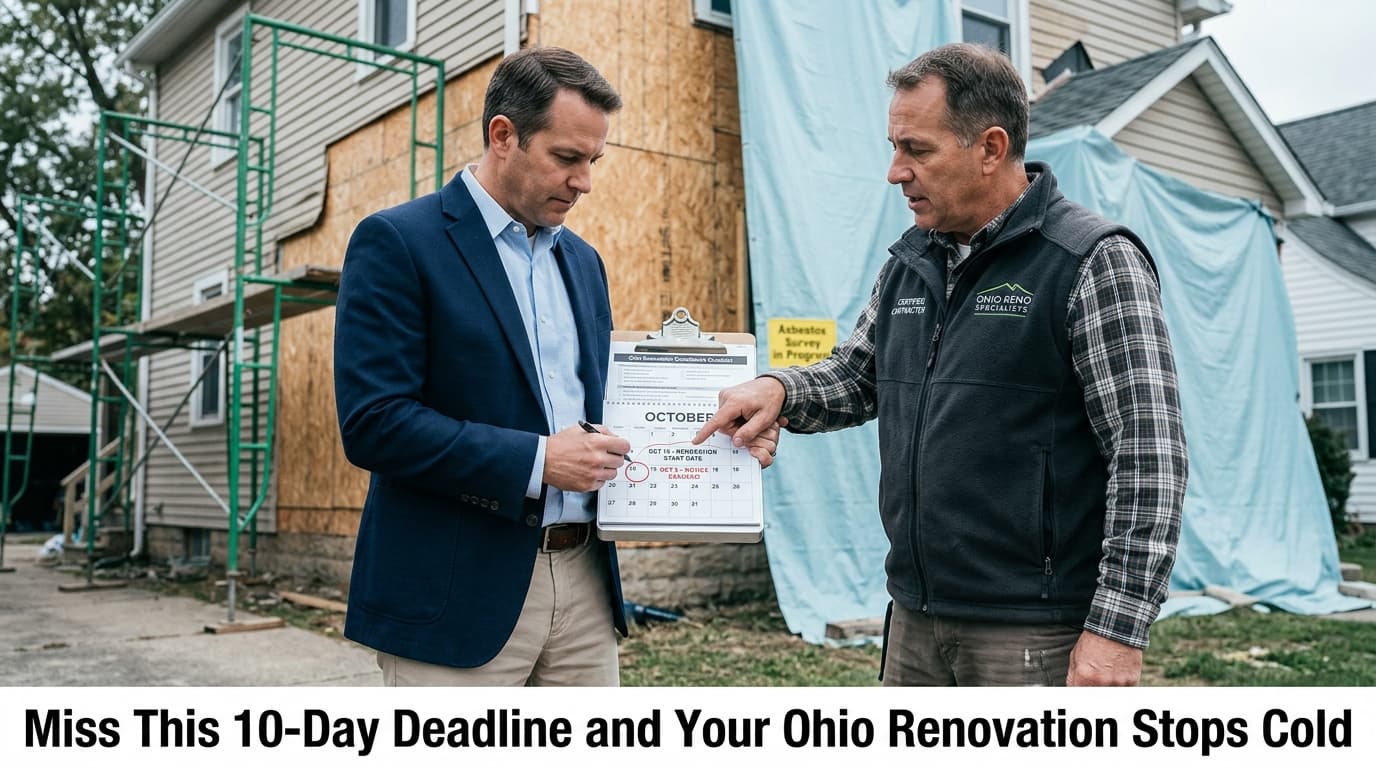
The 10-Day Rule: Why Timing Matters Before Your Project Starts
You have exactly 10 days. That's the mandatory advance notification window Ohio EPA requires before any asbestos removal or demolition activities can begin on your property. This isn't a suggested timeline or best practice guideline. It's a state-mandated legal requirement that catches property owners off guard every day, leading to project delays, regulatory penalties, and potential health risks.
The 10-day notification requirement kicks in when your project involves 50 feet or 50 square feet of asbestos-containing material. Many property owners assume this threshold only applies to major commercial demolitions, but residential renovations frequently cross this line. Removing old siding, updating HVAC systems, or renovating basements in pre-1980 homes often triggers the notification requirement without warning.
Missing this deadline doesn't just delay your project. Ohio's asbestos regulations carry serious enforcement consequences, including work stoppages and financial penalties. The notification period allows state inspectors to review your project plans, verify contractor credentials, and ensure proper safety protocols are in place. Starting work without proper notification violates state environmental law and puts everyone on your property at risk.
Central Insulation Systems has navigated these Ohio EPA requirements for over 38 years, helping property owners understand that compliance planning must begin weeks before the first tool touches your building. The 10-day rule represents the absolute minimum timeline, but smart property owners start the regulatory process much earlier.
What Triggers Ohio EPA Notification: Know Your Asbestos Threshold
Ohio's 50 feet or 50 square feet threshold might sound straightforward, but the measurement rules often surprise property owners. Linear footage applies to pipe insulation, ductwork wrapping, and structural beam covering. Square footage covers wall materials, floor tiles, ceiling panels, and roofing components. A single room renovation can easily exceed both measurements simultaneously.
Pre-1980 homes should be inspected before purchase or renovation due to asbestos risk, but the notification requirement applies regardless of your building's age. Even newer structures can contain asbestos in specific materials like joint compounds, gaskets, or imported building products. The threshold measurement includes all asbestos-containing materials disturbed during your entire project, not just individual components.
Small projects create the biggest compliance surprises. Replacing a section of old ductwork might seem minor, but if the insulation wrapping exceeds 50 linear feet, you've triggered state notification requirements. Similarly, removing vintage floor tiles from a modest room can quickly surpass the 50 square foot threshold when you include the underlying adhesive layer.
The counterintuitive reality is that project size doesn't determine regulatory requirements. Material type and quantity do. A bathroom renovation involving asbestos-containing materials requires the same 10-day notification and professional contractor certification as a major commercial demolition. Understanding this threshold prevents costly project interruptions and ensures your renovation stays on schedule and within legal bounds.
Contractor Certification: The License Requirement Ohio Enforces
Ohio asbestos regulations demand that contractors obtain certification or licensure from the state's director of health before touching any asbestos-containing materials on your property. This isn't a voluntary professional credential or industry certification. It's a state-mandated license that can be denied, suspended, or revoked for fraud, failure to meet requirements, or violation of federal NESHAP or OSHA standards.
Verifying contractor credentials protects you from liability and ensures proper removal techniques. Licensed and certified contractors understand Ohio's specific regulatory requirements, maintain appropriate insurance coverage, and follow established safety protocols. Unlicensed contractors put your property, family, and neighbors at serious health risk while exposing you to regulatory penalties and potential lawsuits.
The state's licensing system includes ongoing compliance monitoring. Contractors must demonstrate continued competency, maintain proper equipment, and document their removal procedures according to state standards. Licenses can be revoked for violations, meaning a contractor who was certified last year might not be qualified today. Always verify current licensing status before signing any removal contract.
Central Insulation Systems has maintained its licensed and certified status since 1988, providing EPA and OSHA compliant asbestos removal services for nearly four decades. This track record demonstrates the consistent regulatory compliance and professional expertise required for safe, legal asbestos removal in Ohio. When evaluating contractors, prioritize established companies with verifiable licensing history and documented compliance records.
Safe Removal Methods: Wet Techniques, Sealed Areas, and PPE Requirements
Ohio's asbestos regulations mandate specific removal techniques that aren't optional safety suggestions. Wet methods must be used during asbestos removal to prevent fibers from becoming airborne, creating a controlled environment that protects workers and building occupants. These techniques involve saturating materials with water or specialized wetting agents before disturbance, maintaining moisture throughout the removal process.
Work areas must be sealed off during asbestos removal procedures using plastic sheeting, negative air pressure systems, and controlled access points. This containment prevents contaminated air from spreading to other building areas and creates a controlled workspace for safe material handling. Visible emissions are prohibited during collection, processing, packaging, transporting, or deposition of asbestos waste material.
Appropriate personal protective equipment (PPE) is required for asbestos removal professionals, including respirators, protective clothing, and decontamination procedures. These requirements apply to all workers entering the removal area, not just those directly handling materials. The PPE standards are specific to asbestos work and differ from general construction safety equipment.
State inspectors monitor compliance with these technical requirements during removal projects. Violations can result in immediate work stoppages, contractor license suspension, and property owner liability. The removal methods aren't guidelines that contractors can modify based on project conditions. They're legal requirements with specific technical standards that must be followed exactly as written in Ohio's environmental regulations.
Waste Disposal and Labeling: The Final Compliance Step
All asbestos-contaminated waste must be disposed of at designated waste disposal centers in Ohio, not regular construction dumpsters or landfills. These specialized facilities have the equipment and permits necessary to handle hazardous materials safely. Using unauthorized disposal sites violates state environmental law and creates ongoing liability for property owners.
All containers holding asbestos-contaminated materials must be clearly labeled with specific information including material type, removal date, contractor information, and hazard warnings. This labeling requirement applies during transport and storage, ensuring proper handling throughout the disposal chain. The labels must meet specific format requirements and remain legible during the entire disposal process.
Property owners remain liable for proper disposal even after contractors complete the removal work. If your contractor uses unauthorized disposal methods or fails to properly label waste containers, you could face regulatory penalties and cleanup costs. Verifying disposal procedures and obtaining documentation protects you from future liability and ensures complete regulatory compliance.
The disposal documentation becomes part of your permanent property record, demonstrating compliance with Ohio asbestos regulations for future buyers, insurers, and regulatory inspectors. Maintaining these records proves that removal work was completed according to state standards and protects your property value.
Your Action Plan: How to Stay Compliant and Protect Your Property
Start your compliance process by hiring an independent inspector to assess your property for asbestos-containing materials before any renovation or demolition planning begins. Independent inspectors should be used separately from removal contractors to avoid conflicts of interest, ensuring objective material identification and accurate project scope development.
Verify that any contractor you consider has current state certification and maintains EPA and OSHA compliant procedures. Request documentation of their licensing status, insurance coverage, and disposal protocols before signing any removal contract. Allow at least 10 days minimum before work starts, but plan for longer timelines to accommodate inspection results and contractor scheduling.
Obtain written documentation of all procedures including removal methods, waste handling, and disposal facility information. This documentation protects you from regulatory penalties and provides the compliance records required for future property transactions. Confirm that disposal will occur at designated centers and that all labeling requirements will be met.
Central Insulation Systems provides licensed and certified asbestos removal services with complete regulatory compliance documentation. Our 38+ years of experience with Ohio asbestos regulations ensures your project meets all state requirements while protecting your property and family from health risks. Contact us at (513) 242-0600 for a free estimate and professional consultation about your specific project requirements. Don't let the 10-day notification rule delay your project: start planning your compliance strategy today.


